Booster Pump Installation adds a properly sized pump for homes or properties needing more water pressure; pump capacity and electrical work shape the typical $1,000–$3,500 range.
Hot Water Pressure Weaker Than Cold? What to Check First
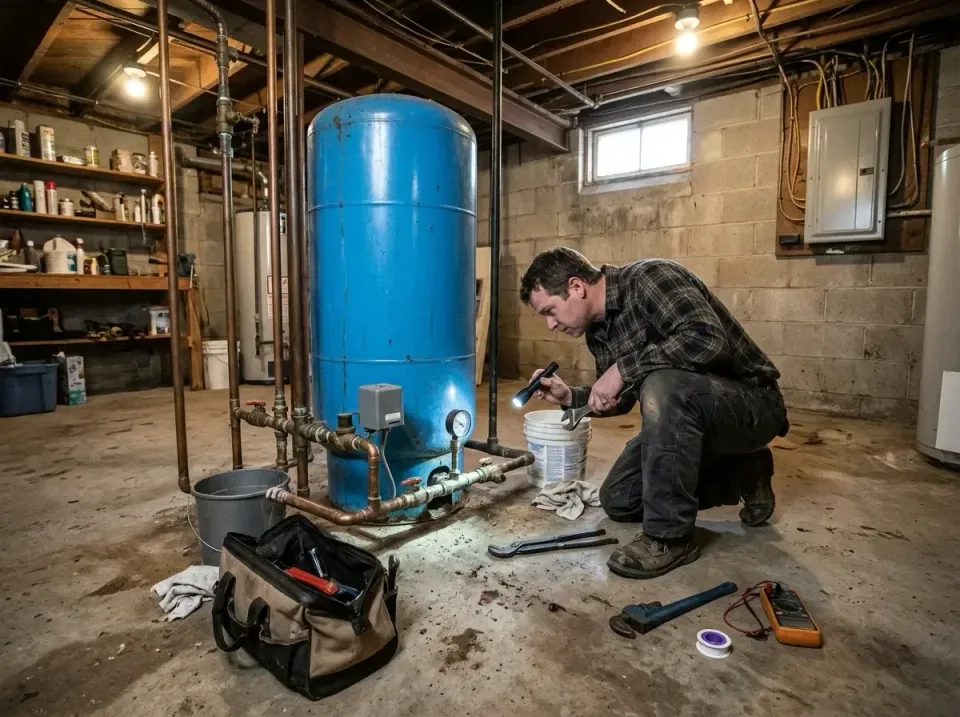
Why Is Hot Water Pressure Weaker Than Cold?
If your shower runs strongly on cold but fades when you turn the handle hot, start by checking whether the problem affects one fixture or every hot tap. A hot-side restriction is a different clue from low water pressure throughout the home.
Check the faucet or showerhead for debris you can safely clean, then compare hot flow at another fixture. Don’t force a stuck valve.
Water pressure diagnosis means tracing where flow changes before recommending a repair, which can help avoid replacing the wrong part. Our crew checks the source and explains the finding before work begins.
Detroit-area freeze-thaw cycles can stress exposed plumbing, and homes near the Detroit Riverwalk are part of the Michigan communities we serve.
Does the Hot-Side Problem Affect Every Fixture?
When hot water is weak at just one faucet, check its aerator or showerhead for grit and mineral buildup before assuming the water heater is at fault. If every hot tap is affected, the restriction may be closer to the heater or in a shared hot-water line.
Start with the pattern, not a replacement part. We compare hot and cold flow at several fixtures because a single weak outlet can send homeowners toward an unnecessary system repair.
A low cold-water pressure repair is relevant when cold flow is also weak, especially if several fixtures are affected. That points the investigation toward a shared supply issue rather than a hot-side-only restriction.
Michigan homes experience seasonal temperature swings; around Eastern Market, Detroit, freeze-thaw conditions can put stress on exposed plumbing. A visible leak, damp spot, or sudden change calls for prompt investigation rather than repeated testing.
What If Pressure Changed After Heater Replacement?
Low hot water pressure after water heater replacement can follow a disturbed shutoff, a partly closed valve, or debris shifted during the work. Check that accessible hot-side valves are fully open, but don’t force a handle that resists. If the drop began immediately after installation and affects more than one fixture, contact the installer or a plumber to inspect the connections and hot-water path.
The practical question is whether the restriction starts at one outlet or is shared. We trace the hot line and check fixture flow before discussing low hot water pressure repair. That sequence matters: a local blockage and a supply-side restriction call for different work. Keep the area around the heater clear and note when the change began.
What Is Normal Household Water Pressure?
Normal household water pressure is commonly referenced as 40–80 psi, but that range alone does not explain weak hot flow at one tap. A reading with no water running is static pressure; the reading can change under demand, so diagnosis also considers flow while a fixture runs. If you have a suitable gauge and know how to use it safely, record the reading without adjusting equipment.
A whole-home reading that looks ordinary does not rule out a blockage in the hot-water path. Our residential water pressure diagnosis compares measurements and fixture behavior instead of treating one number as a complete answer. If several cold fixtures also lose flow, a separate supply issue may be present.
When Should You Call a Plumber Instead of DIY?
You can clean an accessible faucet aerator or showerhead if you can remove it without damaging the fixture. Stop there if several hot fixtures are weak, a valve is stuck, a leak appears, or the issue began after plumbing work. Don’t dismantle heater connections or adjust equipment you cannot identify.
What causes sudden low water pressure depends on where the change occurs; a new symptom across hot and cold fixtures deserves broader investigation than one sluggish tap. A booster pump for low municipal water pressure in Michigan is not an automatic fix for a hot-side restriction.
It should only be considered after testing establishes a whole-supply pressure problem and the system’s needs. We explain findings and available options before doing only the work you approve.
Which Repair Fits Weak Hot-Water Flow?
If cold taps are normal but several hot fixtures run weakly, start with hot-water diagnosis; broader symptoms may point elsewhere. The pipe size and water source help narrow the path.
| Option | Best for | Key detail |
|---|---|---|
| Hot-water pressure diagnosis | Weak hot flow at multiple fixtures | Compare fixture behavior and inspect the hot-water path. |
| Clogged water line repair | A restriction affecting a line or branch | A common fixture branch is 1/2 inch; the affected section matters. |
| Pressure regulator repair | Supply pressure problems affecting the home | A regulator controls incoming pressure; it does not clear a hot-side blockage. |
| Private well pressure repair | Weak flow in a home supplied by a well | Check the well system before choosing a repair. |
| Pressure tank replacement | A well system with tank-related symptoms | The tank helps reduce well-pump cycling; the pump moves water. |
A technician can distinguish these possibilities by following the symptom to its source. Ask what test supports the recommended repair.
How Do You Check Weak Hot-Water Flow?
Keep the first checks simple and note what changes from one fixture to another. Don’t open equipment or adjust a system you are not familiar with.
-
Compare fixtures: Run hot water at two or three taps and note whether the weak flow is isolated or widespread.
-
Compare hot and cold: At the same fixture, observe whether only hot flow is reduced; this helps define the symptom.
-
Check accessible outlets: Clean an aerator or showerhead only if it comes off safely and without force.
-
Record the change: Note when the problem began, especially whether it followed heater work or a sudden event.
-
Prepare access: Clear the area around the heater and relevant fixtures before a home water pressure service visit.
-
Leave equipment checks to a pro: A pressure-tank precharge check requires the water system to be depressurized first, so don’t attempt it on a live system.
A water pressure gauge test can add useful evidence, but readings should be interpreted alongside fixture flow and system conditions.
Common Questions About Low Water Pressure Repair in Michigan
Can Hot Water Pressure Be Weak at One Faucet but Normal Elsewhere?
Yes, hot water pressure can be weak at one faucet while other fixtures run normally, which makes a local outlet or branch restriction more likely than a whole-home issue. Compare hot and cold flow there, then check another hot tap before arranging Low Hot Water Pressure service.
How Much Does a Pressure Diagnosis Cost When Hot Taps Are Weak?
Pressure diagnosis is $75–$250, with testing and access affecting the work involved. Michigan Plumbing Pros can compare the symptom at fixtures and explain the recommended next step before repair work is authorized.
Should I Try to Fix Weak Hot-Water Pressure Myself?
Yes, you can clean an accessible aerator or showerhead if it removes without force, but stop if several hot fixtures are affected or you find a leak. For well systems, switch settings commonly use 20/40, 30/50, or 40/60 psi, so avoid changing settings without proper diagnosis.
Do Detroit Permits Apply to Repairs for Weak Hot-Water Pressure?
Detroit plumbing permits are handled through the Buildings, Safety Engineering, and Environmental Department, and the required permit depends on the planned work. Michigan Plumbing Code, 2021 edition, is a relevant code reference; confirm requirements with the local enforcing agency before regulated work.
Could Corroded Pipes Cause Hot Water Pressure Weaker Than Cold?
Yes, corrosion can narrow a pipe and restrict hot flow, especially when the problem affects multiple fixtures on the same route. If inspection points to corroded pipe replacement, ask the plumber to identify the affected section; applicable water systems may also have Lead and Copper Rule requirements.
Get the Hot-Water Restriction Traced Before Replacing Parts
If cold flow is normal and hot flow is weak at several fixtures, have the hot-water path checked before buying replacement equipment. Upstairs sinks that barely produce water may point to a broader distribution problem, while a single weak tap can have a local cause.
A main water shutoff valve repair may be needed if a valve is damaged or will not operate, but don’t force it. Michigan freeze-thaw weather can also contribute to frozen service lines that reduce household pressure.
Our crew can test the system, explain the findings, and outline options before authorized work begins.
| Reading or symptom | What it suggests |
|---|---|
| 40–80 psi reference range | Common residential pressure reference |
| Below 40 psi | Low-pressure troubleshooting threshold |
| Above 80 psi | A pressure-reducing valve is commonly recommended |
For hot-side testing and repair, contact Michigan Plumbing Pros at (877) 773-0781 or review our Low Hot Water Pressure service.
Services Offered
Services We Offer in Detroit, MI
Explore related services available in Detroit, MI.
Water Pressure Diagnosis compares static and flowing readings for Michigan homes; a typical visit is $100–$300, with access and testing scope affecting the cost.
Sudden pressure loss repair covers abrupt whole-home flow drops, including accessible supply-line and pressure-control faults. Typical repairs run $300–$2,000, depending on leak location and excavation.
We repair or replace residential pressure regulators, including valve sizing and connection work; typical jobs run $250–$700 depending on valve size and labor.
Well pressure service checks the pump, switch, tank, and piping; tank size and piping changes affect repair scope.
We trace weak hot-water flow in homes, checking heater connections and accessible pipe runs; typical service runs $150–$500, depending on access and the restriction.
Whole-house pressure repair for homeowners and property managers includes tracing shared-line problems and checking accessible connections; scope and access shape typical costs, often around $300–$2,000.
Well pump repair for homeowners covers pump and control faults; typical repairs run about $250–$900, depending on access and parts needed.
We repair or replace residential well pressure tanks, including bladder and connection issues; typical jobs run $450–$1,300, depending on tank size and piping access.
Frozen Pipe Repair finds and restores frozen residential lines, including hard-to-reach pipe sections; typical repairs run $200–$1,000, depending on access and damage.
We trace weak cold-water flow at fixtures and supply lines; access, pipe material, and repair scope shape the job cost.
Main shutoff repair for homeowners includes valve access and replacement; typical jobs run $300–$800, depending on valve size and access.
We clean, repair, or replace faucet aerators for homeowners, including mineral debris in small screens; typical service runs $75–$200 depending on access and parts.
We replace corroded residential water-pipe sections, including accessible galvanized steel, with scope and access shaping typical $500–$3,000 job costs.
Clogged water line repair clears restricted residential lines; excavation and blockage location affect typical $300–$2,000 repair costs. We serve Michigan homes near Downtown Flint and Ann Arbor.
We clean, repair, or replace showerheads for Michigan homeowners, including accessible fixture connections; typical jobs run $125–$350 depending on access and parts.
Cities & Towns
Service Areas in Detroit
Select a city to find local low water pressure repair providers we cover in Detroit.
Eastwood, MI49048Highland Park, MI48203St. Charles, MI48655Leslie, MI49251Kalamazoo, MI49008Portage, MI49024Hillsdale, MI49242Williamston, MI48895Jonesville, MI49250River Rouge, MI48218Menominee, MI49858Wyoming, MI49519Lathrup Village, MI48076Lowell, MI49331Riverview, MI48193Dexter, MI48130Alpena, MI49707Houghton Lake, MI48629Blissfield, MI49228Livonia, MI48154Romeo, MI48065Roosevelt Park, MI49441Marine City, MI48039Holt, MI48842
Show all 300 cities
Fowlerville, MI48836St. Louis, MI48880Howell, MI48843Belleville, MI48111Keego Harbor, MI48320Norton Shores, MI49441Lake Odessa, MI48849Charlotte, MI48813Ann Arbor, MI48104Roseville, MI48066Chelsea, MI48118Croswell, MI48422Lincoln Park, MI48146Clinton, MI49236Traverse City, MI49684Jackson, MI49203Mount Pleasant, MI48859Harrison, MI48625Kingsford, MI49802Ferndale, MI48220Allen Park, MI48101Grand Rapids, MI49503Center Line, MI48015Pearl Beach, MI48001Michigan Center, MI49254Garden City, MI48135
Get a Quote
Get a Low Water Pressure Repair Quote in Detroit, MI
Share job details below or call our team directly. Phone: (877) 773-0781